Sometimes, it cleanses the soul to talk to oneself... This reminds me of an ancient Oriental myth of confining secrets to a hole dug in a tree... Will you find treasure there? I doubt it...
IL DEPEND DE CELUI QUI PASSE QUE JE SOIS TOMBE OU TRESOR
QUE JE PARLE OU ME TAISE CECI NE TIENT QU'A TOI AMI N'ENTRE PAS SANS DESIR
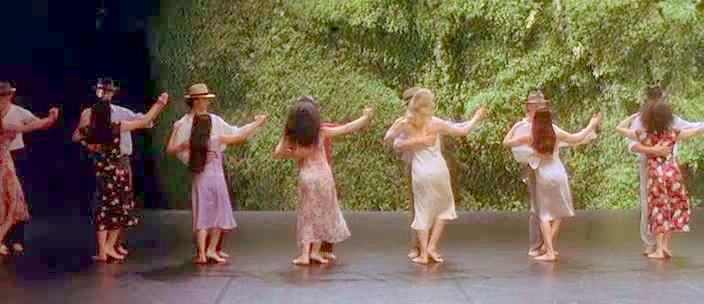
Palais de Chaillot - Paris
Nuovo cinema Paradiso, internationally released as Cinema Paradiso, is a 1988 Italian film written and directed by Giuseppe Tornatore. The film stars Jacques Perrin, Philippe Noiret, Leopoldo Trieste, Marco Leonardi, Agnese Nano and Salvatore Cascio; produced by Franco Cristaldi and Giovanna Romagnoli. The movie was shot in director Tornatore's hometown Bagheria, Sicily and in Cefalù on the Tyrrhenian Sea. The short version of 123 minutes was released internationally to an instant success. It won the Special Jury Prize at the 1989 Cannes Film Festival and the 1989 Best Foreign Language Film Oscar.
This clip introduces Toto, a charming and witty kid living in this Sicilian village with his mother while his father went to war never to return. Toto is the altar boy of the local priest who, after the Sunday mass, doubles in the role of the village's head of the censorship committee of one. Alfredo, the projectionist of the only movie theater "Cinema Paradiso" shows private viewings of all movies to the priest who makes decisions and commands Alfredo who cuts out all kissing scenes. Alfredo has to re-splice the cutting scenes before returning the movie reels to the distributor. Toto befriends Alfredo and gets to watch all these censored scenes. He develops a special bond with Alfredo who gives him a father figure he longs for; and a deep passion for movies which later shapes his life.
Are you blue? Life is tough on you? Your stocks went South? Are you melancholy? Lovesick? Sad? Leave your trouble outside... come in here for 13 minutes to listen to Over the Rainbow with a twist. This will cheer you up!
My last blog lead me to the guitar of Orpheus. That reminds me of my old classical guitar days. I gave up after getting tired of trying the tremolo. One thing leads to another and I must show you a great piece of classical guitar music: Recuerdos de la Alhambra, composed in 1896 by Spanish composer and guitarist Francisco Tárrega. This work was done in Granada where you find the Alhambra, the most important and also the best conserved Arabian palace in Spain. The name Alhambra comes from an Arabic root meaning "red or crimson" suggesting the hues of its towers and walls. Originally designed as a military area, the Alhambra became the residence of royalty and of the court of Granada in the middle of the thirteenth century. It is for this fortress that Tárrega wrote his great recuerdos, meaning memory or I remember (remember Amarcord? It's the same idea.)
This composition is a must for all classical guitar players to master. It's a test of endurance for the tremolo, which is the playing continuously a guitar string using the annular, middle and index fingers to produce an uninterrupted string of crisp notes. I can tell you from personal experience, it ain't easy. The tremolo is designed to create the illusion that the music is a duet of two guitars, but it is a solo performance. This composition is in the A minor key transitioning into the major A in the latter part, so Granada, so melancholy but oh so romantic!
All classical guitarists have recording of this composition. This clip is by Sharon Isbin, a world class classical guitarist. I selected her performance over many others, including that of Andreas Segovia because you may agree with me that her entire soul is in her playing. The clip is from a Korean TV re-recording so the quality is abysmal, but that's all I can find.. for now.
Black Orpheus (Original Intl. release title: Orfeu Negro): The Film. Dispat Films, December 1959, is a great classic Portuguese-language film by French director Marcel Camus and based on a play by Vinícius de Moraes. The music of this film became known throughout the world.
"Manhã de Carnaval" ("Morning of Carnival"), is the title of the most popular song by Brazilian composers Luiz Bonfá and Antonio Maria. Particularly in the USA, the song is considered to be one of the most important Brazilian Jazz/Bossa songs that helped establish the Bossa Nova movement in the late 1950s. Manhã de Carnaval has become a jazz standard in the USA, while it is still performed regularly by a wide variety of musicians around the world in its vocalized version or just as an instrumental one.
In the USA, the song is also known as "A Day in the Life of a Fool", "Carnival", "Theme from Black Orpheus", or simply "Black Orpheus". In France, the song is also known as "La Chanson D'Orphée." The song is also known by the Spanish title "Mañana de Carnaval". All versions of foreign texts were written by different people using Bonfá's original music. The list of Recordings of Manhã de Carnaval is impressive, litterally by everyone who's who in the world of music.
Although most of the songs in the film, Orfeu Negro (Black Orpheus) were composed by Antônio Carlos Jobim and Vinícius de Moraes, Manhã de Carnaval was one of two by composer Luiz Bonfá (the other being "Samba de Orfeu"). Manhã de Carnaval was by far the song that got branded popularly as the movie theme in "Black Orpheus." Luiz Bonfá's success with his 1959 hit song was great, and made his name so well known in the music industry internationally that on several occasions US producers brought him from Brazil to the USA for TV presentations. "Manhã de Carnaval" was originally sung by Elizete Cardoso and Agostinho dos Santos.
The first clip from Black Orpheus was blogged in December of 2006 here. In that clip, Orpheus was singing Manhã de Carnaval to the two kids who believe that Orpheus has the magical power of making the sun rise by playing his guitar and singing. During this song, he was heard by Eurydice in her room next door, and love was born.
Today's clip is the second famous song, Felicidade, sung by Orpheus to Eurydice while a fabulous new sun was rising over the slumps of Rio de Janeiro where the story took place.
Felicidade
Music: Antônio Carlos Jobim
Lyrics: Vinicius de Moraes
A minha felicidade esta sonhando..... My happiness is dreaming
Nos olhos da minha namorada..... In the eyes of my girlfriend
E como esta noite, passando, passando..... It's like this night, passing, passing
Em busca da madrugada..... Seeking the dawn
Falem baixo, por favor..... Speak low, please
Pra que ela acorde alegre com o dia..... So she might wake up happy
Oferecendo beijos de amor..... Offering a kiss of love
Tristeza nao tem fim..... Sadness has no end
Felicidade sim..... Happiness does
A felicidade é como a gota..... Happiness is like a drop
De orvalho numa pétala de flor..... of dew on a flower's petal
Brilha tranquila..... Brilliant and tranquil
Depois de leve oscila..... Then quivering
E cai como uma lagrima de amor...... Then falling like a tear of love.
You can read the English translation in the subtitle of the clip.
In case you are really interested in this movie, its original soundtrack has 14 tracks. The second is heard at the very beginning of the movie when the credit runs. It is an introduction to Felicidade, the lyrics of which is below:
Tristeza não tem fim
Felicidade sim
A felicidade é como uma gota de orvalho
Numa pétala de flor
Brilha tranquila
Depois delevocila
E cai como uma lágrima de amor
A felicidade do probre parece
A grande ilusão do carnaval
A gente trabalha o ano inteiro
Por um momento de sonho para fazer a fantasia
De rei ou de pirata ou de jardineira.
Pra tudo se acabar na quarta feira.
Tristeza não tem fim
Felicidade sim
A felicidade é como uma pluma
Que o vento vai levando pelo ar
Voa tão leve
Mas tem a vida breve
Precisa que haja vento sem parar.
Tristeza não tem fim
Felicidade sim
Click on the player to hear this original track.
In Amarcord, Fellini created a large cast of characters to populate his fictitious Borgo to represent the Rimini of his childhood. Each of the personalities has his/her own charm.
Fiorella and her sister Gradisca (Magali Noël), the village beauty, the blind accordion player (Domenica Pertica) relentlessly tormented by schoolboys; Volpina (Josiane Tanzilli), the stringy blond nymphomaniac; the stout and buxom tobacconist (Maria Antonietta Beluzzi); Titta (Bruno Zanin), the rosy-cheeked adolescent protagonist based on Fellini's childhood friend; Aurelio (Armando Brancia), Titta’s father, a construction foreman of working-class background. Modest and reserved, Aurelio responds in frenzied anger to Titta’s pranks while Miranda (Pupella Maggio), his wife, always comes to her son’s defense. Miranda’s brother, Lallo (Nando Orfei), lives with Titta’s family, sponging off his brother-in-law. In tow are Titta’s grandfather (Peppino Ianigro), a likeable old goat with an eye on the family’s young maid, a street vendor, Biscein (Gennaro Ombra), the town’s incorrigible liar; and many more unique characters...
In this clip, during one summer afternoon, the family visits uncle Teo (Ciccio Ingrassia), Aurelio’s brother, confined to an insane asylum. They take him out for a day in the family's country farm house but he escapes into a tree yelling, "Voglio una donna!" ("I want a woman!"). After 5 hours, they managed to get him down. "We are all mad at times," is the message of this clip. Watching this clip, do not miss it when Titta asked his father if he should go get Volpina to help getting his uncle Teo down from the tree.
This movie is well known for a scene about the protagonist Titta having his unforgettable encounter with the village's huge tobaccconist in her store. If you want to see that scene, you must see this movie because I do not really want to blog it here. Should I?
Back in December 02, 2006, I blogged my favorite segment from the movie Amarcord, but that clip is no longer viewable. Let's redo it here. Today's clip may be a bit longer... but it is still my very favorite excerpt from that movie.
Amarcord is a 1973 Italian film directed by Federico Fellini, a semi-autobiographical tale that combines poignancy with history and yes, comedy. It tells the story of a wild cast of characters inhabiting the fictional Borgo based on Fellini's hometown of Rimini in 1930s Fascist Italy. Amarcord is Romagnolo for "I remember."
Amarcord won the Oscar for Best Foreign Language Film, and was nominated for two Academy Awards: Best Director and Best Writing, Original Screenplay. If you have not seen that movie, you must! I'll blog another clip here soon...
Mr. Bojangles is the title of a song originally written and recorded by American country music artist Jerry Jeff Walker for his 1968 album of the same title. Since then, it has been covered by many other artists, including American country music band The Nitty Gritty Dirt Band, whose version (recorded for the 1970 album Uncle Charlie & His Dog Teddy) was issued as a single and rose to number nine on the Billboard Hot 100 pop chart in 1971.
Walker has said he was inspired to write the song after an encounter with a street performer in a New Orleans jail. Walker said while in jail for public intoxication in 1965, he met a homeless white man who called himself "Mr. Bojangles" who told a story about his dog and when it turned too sad, he escaped with a tap dance.
Walker's song has been re-recorded by many popular artists, including Harry Chapin, J.J. Cale, Sammy Davis Jr., Chet Atkins, Rod McKuen, Whitney Houston, Billy Joel, Harry Nilsson, Bob Dylan, Don McLean, The Byrds, Harry Belafonte, Frank Sinatra, Bobby Cole, Elton John, Lulu, Arlo Guthrie, Nina Simone, Esther Phillips, John Denver, David Bromberg, Neil Diamond, Tom T. Hall, King Curtis, Radka Toneff, John Holt, Kristofer Åström, Bermuda Triangle Band, Robbie Williams, David Campbell, Jamie Cullum, Ray Quinn, Edwyn Collins, Frankie Laine, Cornell Dupree, Jim Croce, Todd Snider, Jim Stafford, Jamie Walker and Cat Stevens. Furthermore, composer Philip Glass makes reference to "Mr. Bojangles" in his minimalist opera Einstein on the Beach. A French version of the song was recorded in 1984 by Hugues Aufray on his album L'enfant Sauvage. Jim Carrey has allso preformed this song on his earlier stand up stuff plus at his first movie copper mountain.
I think that Sammy Davis Jr. had his signature on this song and owned it in this performance. This is quite a sad song.
Stanley Kubrick (July 26, 1928 – March 7, 1999,) an American movie director, made many memorable movies. A perfectionist, he always paid meticulous attention to the details of his movies, each one of which is a work of its own, distinct from all of his others. I have blogged two of his movies: Paths of Glory and Eyes Wide Shut. This is Lolita, a 1962 film based on the classic novel of the same title by Vladimir Nabokov. The film stars James Mason as Humbert Humbert, Sue Lyon as Dolores Haze (Lolita, a nickname that forever after associated with a nymphet) and Shelley Winters as Charlotte Haze with Peter Sellers as a devilish character named Clare Quilty.
Due to the Motion Picture Association of America's (MPAA) restrictions at the time, the film could not faithfully recreate the far more provocative aspects of the novel, leaving a lot to the viewers' imagination. The actress who played Lolita, Sue Lyon, was fourteen at the time of filming.
The prudish censorship of the time severely restricted Kubrick's artistic creativity. He later commented that, “because of all the pressure over the Production Code and the Catholic Legion of Decency at the time, I believe I didn't sufficiently dramatize the erotic aspect of Humbert's relationship with Lolita. If I could do the film over again, I would have stressed the erotic component of their relationship with the same weight Nabokov did.” In a 1972 Newsweek interview, Kubrick said that had he realized how severe the censorship limitations affected his movie, he "probably wouldn't have made the film."
Lolita's age was raised to fourteen, as Kubrick believed that this was the right age. He has commented that, “I think that some people had the mental picture of a nine-year-old, but Lolita was twelve and a half in the book; Sue Lyon was thirteen.” (Actually, Lyon was 14 at the time of filming: she was born in July 1946 and it was shot between November 1960 and May 1961.)
When released, Lolita was Rated BBFC X by the British Board of Film Censors, meaning no one under 16 years of age was permitted in theaters where it was showing.
This clip is when Humbert came to see Charlotte Haze, Lolita's mom, looking to rent a room for the summer. Charlotte, desperate widow, immediately came on strongly to Humbert after learning that he was divorced. Watch to see how she does that, which turned him off completely and he was ready to get away from her... until he saw the "Decisive Factor" which is the name of the movie chapter when he first saw Lolita. Alea iacta est!
Veteran arranger Nelson Riddle composed (with Bob Harris) and conducted the music for Kubrick's Lolita. The song introducing Lolita throughout the movie is "Ya Ya," with its loping guitar riff and baby doll "ya-ya-wo-wo-ya-ya" vocal. Below is the Lolita Ya Ya sung by Sue Lyon.
This clip is from a charming 1995 movie, "Il Postino." It was produced with a modest budget of about US $3 Million, and grossed more than $ 75 Million worldwide. At release, the film was so successful its theatrical run in New York City lasted almost 2 years.
Pablo Neruda (Philippe Noiret,) the famous Chilean poet, is exiled for political reasons to a small fishing island in Italy. There, a postman, Mario Ruoppolo (Massimo Troisi) is created to deliver Neruda's mail as his personal "Il Postino." Using Neruda's poems, Mario got into trouble with Rosa, aunt of beautiful Beatrice (Maria Grazia Cucinotta) who fell for Mario's borrowed poems. This clip is so charming, I redo it here and make it longer with subtitle, more complete than the blog "Nude Madreselva" on December 09, 2006, yes, 5 years ago!
Writer/co-director/star Massimo Troisi postponed heart surgery so he could complete the film. The day after filming was complete, he suffered a fatal heart attack. Massimo Troisi was so weak that it was only possible for him to work for about an hour each day. Most of his scenes were shot in one or two takes. A shooting schedule was designed to allow the film to be shot around him. His stand-in had striking resemblance to the real Troisi and was used for all back to camera, long/medium shots and most of the bicycle riding sequences.
The beautiful tango scene's music is "Madreselva"
Written by Francisco Canaro (as F. Canaro) and Luis César Amadori (as L.C. Amadori), performed by Carlos Gardel.
Owen Wilson, in the role of Gil is transported in time from Paris present to Paris in the 20s. This is his first encounter. At the stroke of midnight, an antique limousine picks him up and upon arrival he finds himself in company of famous luminosities of the Golden Years. In this clip, he is in a party thrown for Jean Cocteau (Jean Maurice Eugène Clément Cocteau, 5 July 1889 – 11 October 1963, was a French poet, novelist, dramatist, designer, playwright, artist and filmmaker. His circle of associates, friends and lovers included Kenneth Anger, Pablo Picasso, Jean Hugo, Jean Marais, Henri Bernstein, Marlene Dietrich, Coco Chanel, Erik Satie, María Félix, Édith Piaf and Raymond Radiguet,) where Cole Porter was entertaining his friends with my favorite tune of "Let's Do It, Let's Fall in Love." Listen to this song, and I am sure you will. Then Wilson couldn't believe it when he meets Zelda and Scott Fitzgerald. Zelda is so lively here, and I absolutely love her 'Bama accent. The next car ride took Wilson to a "drop dead" street dancing scene by Josephine Baker after which he'll meet Ernest Hemingway and Co. In case you are too young to know who Josephine Baker was, she made the bananas famous by dancing and singing wearing just a banana skirt. Would you like to see that clip?
Although I think this is not Allen's best movie, it is very good. This is the only clip of this movie that will make it to this blog. The guitar background is guitarist Stephane Wrembel playing Bistro Fada.
There is a new Woody Allen movie that came out recently and I need to see it. But while I wait to find time, here is its opening sequence. Having lived in Paris for a while, I can recognize most of the locations in this clip. I want to go back, not at the contemporary time, but at time bygones. This movie is about just that, a nostalgic time travel to Paris' past of the 20s with encounters of the like of Scott Fitzgerald, Cole Porter, Ernest Hemingway, Gertrude Stein, Picasso, Matisse, Salvador Dali, T. S. Elliot, Djuna Bames, Josephine Baker, Luis Buñuel, Man Ray and others. This movie got a rare 92% rating from Rotten Tomatoes and I will block some of my time to watch it soon. I may even blog a few things from it. The opening Bechet tune is called "Si tu vois ma mere" which means "If you see my mother.".
The Hable Con Ella CD has 20 tracks, only 6 are selected to be included here. Select one of them to play then click mouse on the track of your choice. These are my favorite tracks. Enjoy!
Talk to Her (Spanish: Hable Con Ella) is a 2002 Spanish film written and directed by Pedro Almodóvar (one of my very favorite motion picture directors,) starring Javier Cámara, Darío Grandinetti, Leonor Watling, Geraldine Chaplin, and Rosario Flores. The film won the 2002 Academy Award for Best Original Screenplay and the 2003 Golden Globe Award for Best Foreign-Language Film. In 2005, it won a large number of awards as Best Foreign Film, too numerous to list here. Time magazine film critics Richard Corliss and Richard Schickel included Talk to Her in their list of the All-TIME 100 Greatest Movies. This is, in my book, a great movie to be watched again many times to fully appreciate it. If you do,pay full attention to the music.
In 2006 and 2007, I blogged two short clips from this movie, but they did not really do justice to it. This time, this blog gives a better glimpse of Hable Con Ella. This movie partly owes its great success to its sound track, which I adore.
Continuing the successful collaboration that begun on 1995's The Flower of My Secret, composer Alberto Iglesias works with director Pedro Almodóvar to produce a quietly sophisticated music ensemble to accompany a fascinating story in 2002's Hable Con Ella. If you never heard of Brazilian vocalist Caetano Veloso, listen to his "Cucurrucucu Paloma" by Tomás Méndez (as Tomás Méndez Sosa) here; or listen to a teaser of "Raquel" By Rufino Almeida & Africa Nostra, from the album "Tôp d'Coroa" by Bau.
Today's clip from "Hable Con Ella" is about Lidia, the female professional bull fighter. The first half of the clip's soundtrack is the haunting "Por toda a minha vida" written by Antonio Carlos Jobim (as Tom Jobim) and Vinicius de Moraes, performed by Elis Regina, a famous Brasilian singer who died at the very young age of 35. The song's Portuguese lyrics essentially says "Love is the saddest thing when it goes away." This is a very famous song and the next clip lets you hear it rendered by the master crooner Caetano Veloso himself (I got that from Youtube so the quality of the video is not so good.)
The second half of the Lidia clip shows you a very rare close up of how a toreador (that's the bull fighter's name) is clothed for the very horrific and theatrical bull fights in Spain's bloody arenas. The bulls' bloodiness in this film is real. An ecological group in Madrid tried to sue Pedro Almodóvar for ill treatment of the animals, blaming society for accepting it. Almodóvar said that he had the permission of the bulls' owners to kill them. The story line of the movie has it that Lidia is gored by the bull and never recovered from her coma resulting from her injury. The music during the bull's rampage is "A Portagayola." Return here to hear some of the better movie soundtracks from "Hable Con Ella" in my next blog.
Here is the Youtube clip of "Por toda a minha vida" by Caetano Veloso who has aged a bit since his singing "Cucurrucucu Paloma" in "Hable Con Ella."
Valse triste (Sad Waltz), Op. 44, No. 1, is a short orchestral work in waltz form by the Finnish composer Jean Sibelius. It was originally part of the incidental music he composed for his brother-in-law Arvid Järnefelt's 1903 play Kuolema (Death), but is far better known as a separate concert piece, which was performed in Helsinki on 25 April of that year as Valse triste. It was an instant hit with the public, and remains one of Sibelius' signature pieces.
Originally, the play Kuolema depicted the final moment of the life of a sick mother while her son kept vigil at her bed side. The incredibly sad waltz of Sibelius ended with her last breath. It is far too sad, and I have no wish to show it here.
Instead, also intensely sad, I think it is somewhat better you hear this great piece of composition in a gem of an animation feature: Allegro Non Troppo. It is a 1976 Italian animated film directed by Bruno Bozzetto. This film features six pieces of classical music. Allegro Non Troppo is a parody of Disney's Fantasia, but I think it is a class above.
Among the six, Valse Triste in "Feline Fantasies" hits you in your gut, and I am sure you will be misty and will not soon forget this gem. Enjoy, and get out your handkerchief!
The original music is from DEUTSCHE GRAMMOPHONE 2536 400: "ORIGINAL SOUNDTRACK FROM BRUNO BOZZELLO'S FILM ALLEGRO NON TROPPO. BERLINER PHILHARMONIKER HERBERT VON KARAJAN."
While doing the "Henry & June" blog, my mind was locked in the era of the 30's... Now, allow me to talk about "Taboo," which comes to mind when one sees the movie "The Lover," reliving a story that took place in VietNam's 1929. A taboo is a strong social prohibition relating to any area of human activity or social custom that is sacred and forbidden based on moral judgment and religious beliefs. High on the list is that of forbidden love. And that is the subject of "The Lover." Many discussions about this movie always are focused on the sex scenes. I believe there are four of them, but that is not the only, nor is it the most interesting subject to talk about.
The Lover (French: L'Amant) is a 1992 film produced by Claude Berri and directed by Jean-Jacques Annaud. Based on the short Goncourt prize winning semi-autobiographical 1984 novel by Marguerite Duras, the film details the illicit affair between a teenage French girl and a wealthy Chinese man in Indochina, later known as Viet-Nam when it was still a colony of France, in 1929. In the screenplay written by Annaud and Gérard Brach, the girl's age is changed from 15½ to 17 and is portrayed by actress Jane March, who turned eighteen shortly after filming began.
Production began in 1989, with filming commencing in 1991. The film made its theatrical debut on 22 January 1992, with an English release in the United Kingdom in June and in the United States in October of the same year. The film won the Motion Picture Sound Editors's 1993 Golden Reel award for "Best Sound Editing — Foreign Feature" and the 1993 César Award for Best Music Written for a Film. It received mostly negative reviews from American critics. However the film's performances and cinematography were generally praised.
It is noteworthy that the movie director Annaud almost gave up to have the movie filmed in VietNam due to difficulties found in the country. Realizing they must film their movie in VietNam to retain authenticity, the team returned to VietNam and began filming. Despite tight censorship from the VietNamese government, the movie does contain steamingly hot sex scenes which are not of interest in this blog. Instead, this clip is shown because it contains very nostalgic imagery of the trip from Sa-Dec to Saigon via route 1, about 140km away. From Sa-Dec, where the teen-aged girl lived, passengers must cross one of the branches of the great Mekong river by ferry to reach route 1 by automobile. Route 1 first passes by Vinh Long, another river town downstream then to Saigon. The ferry name was Vam Cong, in the southern province of Dong Thap. The car used in this movie was an authentic Morris Léon-Bollée as it was identified in the book.
The scenery in this clip is strongly suggestive of VietNam in the 30s under French colonialism but the filming was in the 90s and on location. It is hard to believe that VietNam's Sa-Dec in the 90s still looks and sounds like what the movie is showing. I would love to find the behind the scene documentary of this movie to learn how this was done. Did you see the car traversing the wooden bridge? Is it real? There are many more scenes at various on site locations in this movie that tempt me to look further in its making... and keep me wondering how did they do that? But... if you are curious about the sex scenes, you probably will not see them here. The voice you hear recounting the teen-aged girl's life is that of the lovely French actress, singer, screenwriter and director Jeanne Moreau, a legend in her own right.
The Henry and June CD has 18 tracks, scroll the list to select one of them to play using the scroller at right then click mouse on the track of your choice. Enjoy!
The back cover states that "The material on this disc was recorded over a period of sixty years (tracks 1 & 18, 1930; 5, 1932) and in a variety of locations" so the quality of the sound is uneven.
OK. I am going to finish this Henry & June series with this clip that some of you may not like because the scene takes place in a lesbian night club. However, you need to realize that Paris in the 30s and 40s was truly like what this movie is trying to show the audience.
This is the last night that June and Anais spent together before June leaves for New York. Anais is in distress because she began to fall deeply for June after the short time they spent together. The music you hear is one of my very favorite piece and it is played throughout the entire clip in the background. It was arranged by Mark Adler and this song was made popular by none other than diva Marlene Dietrich, entitled "Moi... Je M'Ennuie," music by de Wal-Berg and lyrics by Camille Francois. Dietrich (1901-1992) recorded this song in Paris on July 15th, 1933. If you are interested in that recording, you can hear it using the MP3 player below.
The French lyrics are quite "benign" but don't forget that it was the 1930s... If you never heard Dietrich sing, here's your chance.
De ce que fut mon enfance,
Je n’ai plus de souvenirs.
C’est peut-être que la chance
Ne m’offrit pas de plaisirs.
Et chaque jour qui se lève
Ne m’apporte aucun espoir.
Je n’ai même pas de rêve
Quand luit l'etoile du soir.
Moi, je m’ennuie,
C’est dans ma vie
Une manie.
Je n’y peux rien..
Le plaisir passe,
Il me dépasse.
En moi sa trace
Ne laisse rien.
Partout je traîne,
Comme une chaîne,
Ma lourde peine,
Sans autre bien.
C’est dans ma vie
Une manie.
Moi, je m’ennuie...
Par de longs vagabondages,
J’ai voulu griser mon coeur,
Et souvent, sur mon passage,
J’ai vu naître des malheurs.
Sur chaque nouvelle route,
A l’amour j’ai dû mentir ;
Et le soir, lorsque j’écoute
La plainte du vent mourir...
Moi, je m’ennuie...
C’est dans ma vie
Une manie.
Je n’y peux rien..
Le plaisir passe,
Il me dépasse.
En moi sa trace
Ne laisse rien.
Partout je traîne,
Comme une chaîne,
Ma lourde peine,
Sans autre bien.
C’est dans ma vie
Une manie.
Moi, je m’ennuie...
Many reviews of this movie gave a lot of compliments about the cast chosen for this film, and I do agree with everything said... except that... if you read Anais Nin's biography book by Deirdre Bair, you would have discovered that Nin, although slim, was not the petite woman described by many writers. She was five foot six inches tall and she towered over the tiny June who was about five foot two. Uma Thurman, who is five foot 11 inches is too tall for June, but her Brooklyn accent (along with Fred Ward's as Henry Miller) and her demeanor were perfect to impersonate June Miller while Maria de Medeiros fit Nin to a T although she is shorter than the real Nin. So the casting was truly well done making this movie a pleasure to watch multiple times to appreciate the music and the work devoted to its making.
According to Nin's diary, her relationship with June stopped here at the end of the clip. The movie has some steamy scenes with June but that were only in her imagination as Kaufman has skillfully orchestrated according to his screen play.
Interestingly, I found another blog devoted to this same film here. I will try to find some time and post the soundtrack of this movie in the next blog.
It's time to lower the curtain on Henry & June... and this is the next to last blog about this movie. There is a book written by Deirdre Bair who, it was said, had unlimited access to the unpublished writings of Anais Nin, including more than 250,000 handwritten diary pages: "Anais Nin. A biography" was published in 1995 by Putnam, New York, in hardback, and in 1996 by Penguin in paperback. The relationship between the two women was complicated and Bair said a few things that were relevant to Henry and June, the movie. June was known to be a compulsive liar and Henry Miller had told Anais Nin about June's several lesbian affairs in New York. Nin's and Bair's writings are very important readings for the audience to fully appreciate the directing of Kaufman in this movie, and particularly in this clip. In this scene, June abruptly announces her trip to New York after more lies about her upbringing. Later, the clip highlighted the usual way June negotiates to get what she wants in life. Again, Debussy's "Pour l'Egyptienne" is heard in the background. This scene is a prelude to my last Henry and June clip that includes the great famous song "Je M'ennuie," coming here soon...
I am always interested in learning how a movie director creates a scene in his films to tell a story. The authenticity of a scene is so crucially important that it can make or break a movie, especially if it is a film telling a historical event, whether it is embellished and dramatized or not. It is the attention to details that makes a story believable. Henry and June was a labor of love for Philip Kaufman and his wife Rose, and it showed.
The story begins when Anais Nin and her husband Hugo lived in a house in Louveciennes, from 1930 to 1936 at 2 bis, rue Montbuisson. The house shown in the Henry and June movie looks remarkably similar to the real home in Louveciennes that is now listed for sale at about 4,000 Euro a square meter.
Louveciennes is a commune in the Yvelines department in the Île-de-France region in north-central France. It is located in the western suburbs of Paris, between Versailles and Saint-Germain-en-Laye, adjacent to Marly-le-Roi, and was frequented by impressionist painters in the 19th century. According to the official site, there are over 120 paintings by Renoir, Pissarro, Sisley, and Monet depicting Louveciennes. Even Marcel Proust and Maupassant came to this town to escape Paris regularly. The well known composer Camille Saint-Saëns lived in Louveciennes from 1865 to 1870; and Marie Louise Élisabeth Vigée-Lebrun, the most famous female painter of the 18th century, died in Louveciennes 30 March 1842; Louis, 7th duc de Broglie, physicist and Nobel Prize laureate, died in Louveciennes 19 March 1987. It was thus very significant that Anais Nin started her career as an author in this very special town.
This clip shows the brief time Henry and June Miller were staying with Anais Nin and her husband Hugo in their home in Louveciennes as guests. Nearby is the forest de Marly, renamed from the ancient name of forest of Crüye at the end of the 17th century by Louis XIV who used it as hunting ground. The bicycle riding scene through the forest looks so authentic, and I really would like to know where it was filmed. During this visit, the Millers were not shy to show the great desire they have for each other and that openly charged energy and the aggressiveness of June did not escape Nin's silent fascination. Later on, back at the house, during the classic French match of "petanque" between Henry Miller and Hugo, the wide eyed Nin was the object of June's intense seduction. I am surprised that Kaufman did not play Debussy's Pour l'Egyptienne during that scene. He left the images speak silently without any musical background. You should try to find and read Nin's diary for this particular encounter. During the bicycle ride, the music you hear is Claude Debussy's Petite Suite - Ballet.
This is a very short clip, reflecting the way Philip Kaufman told the story of Henry & June... in short apparently disjoint but connected segments. The entire movie is revolved around Henry Miller's struggle as a writer inking out what eventually became his famous "Tropic of Cancer." I often wondered why that name was chosen... and this my theory:
The Tropic of Cancer, also referred to as the Northern tropic, is the circle of latitude on the Earth that marks the most northerly position at which the Sun may appear directly overhead at its zenith. This event occurs once per year, at the time of the June solstice, when the Northern Hemisphere is tilted toward the Sun to its maximum extent. So, it made sense for Miller to write the biography of his wife whose name is "June," and associated it to the Tropic of Cancer. The imaginary line is called the Tropic of Cancer because when it was named, the Sun was in the direction of the constellation Cancer (Latin for crab) at the June solstice. However, this is no longer true due to the precession of the equinoxes resulting in an annual drift of this imaginary line of latitude. According to International Astronomical Union boundaries, the Sun now is in Taurus at the June solstice. So, a modern day's name for this book would have to be "Tropic of Taurus!" I like Cancer better. Of course, you know about the Tropic of Capricorn in the Southern hemisphere. Let's keep that for another blog in the future.
There are many very interesting histories about this famous book. Tropic of Cancer was first published in 1934 by the Obelisk Press in Paris, France. Its publication in 1961 in the United States by Grove Press led to an obscenity trial that was one of several that tested American laws on pornography in the 1960s.
While famous for its frank and often graphic depictions of sex, the book is also widely regarded as an important masterpiece of 20th century literature. In 1998, the Modern Library ranked Tropic of Cancer 50th on its list of the 100 best English-language novels of the 20th century. Time magazine included the novel in its TIME 100 Best English-language Novels from 1923 to 2005.
The book was distributed by Frances Steloff at her Gotham Book Mart, in defiance of censorship pressures.
In 1964, the U.S. Supreme Court, in Grove Press, Inc. v. Gerstein, cited Jacobellis v. Ohio (which was decided the same day) and overruled state court findings of obscenity.
Again, in this clip, because of June's presence, Philip Kaufman inserted Debussy's "Pour l'Egyptienne" motif in the background.