

Wednesday, April 16, 2008
Bolero Trocadero
This is an unusual performance of Ravel's Bolero. The outdoor location is Paris' Place du Trocadero between the Eiffel tower and the Musee de l'Homme. If you want to know where this comes from, wait until the end of the clip. To guess the time period, spot to see a young Sharon Stone in a couple of scenes. The vocalist is easily recognizable Geraldine Chaplin. It's a bit long (12 minutes 50 seconds) and I hope you like it. I do.


Thursday, March 06, 2008
Thursday, February 07, 2008

Thursday, January 10, 2008

Monday, October 22, 2007
Charlot
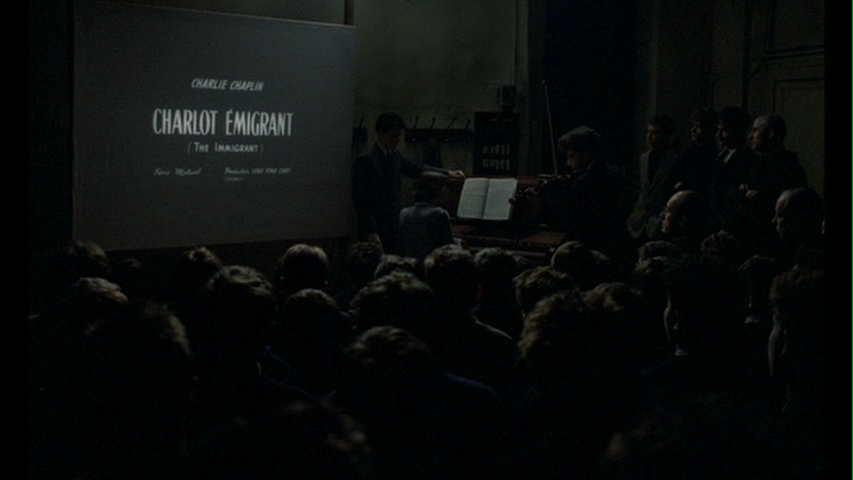
The director is Louis Malle, the music is Rondo Capriocioso from Camille Saint Saens' Violin Concerto #3.
Monday, September 10, 2007
Anita
There is a bittersweet moment in this movie clip that I think is very Proustian a la "Recherche du Temps Perdu." The movie is Intervista, meaning "Interview" which is a pseudo autobiography of movie director Federico Fellini. Intervista is in Italian with English subtitle. I cannot easily extract the clip with the English subtitle so you have to see it without. The key feature really needs no words as it is pure magic. It is when Marcello Mastroianni in a Mandrake costume performed magic to bring back the lost time when young Marcello had a magic moment with then young and beautiful Anita Ekberg in the famous Trevi Fountain of Rome. The clip starts out with Fellini paying a surprise un-announced visit to an aging but still beautiful Anita Ekberg at her estate on the beach. Where did the time go? It is magic.
Sunday, August 12, 2007
Saturday, August 11, 2007
Friday, August 10, 2007
Forget Me Not
I need to get off my rocker chair and dust off my video tools to refurnish my blog here. It has been a long, long time... OK. Promised! Very soon! How about a musical? You like musical?
Monday, May 21, 2007
Tuesday, May 01, 2007
Nessun Dorma
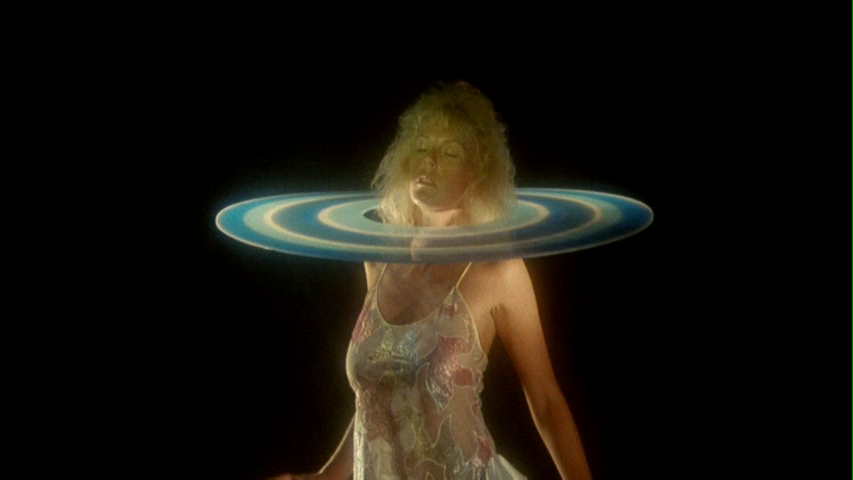
Warning... Rated R, containing some nudity and images may be disturbing to some sensitive souls. This is from an old favorite movie of mine that I finally got around to revive. The clip contrasts gruesome scenes with beautiful and sensual allegorical images, all accompanied by a world class musical score with a happy ending.
Sunday, April 08, 2007
Schubert Andantino
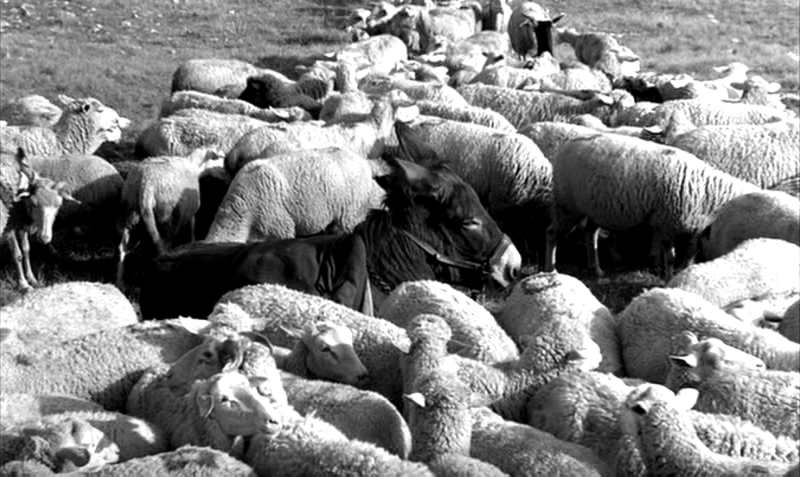
The music is Franz Schubert's Piano Sonata No.20 in A major D959 : Andantino (second mouvement,) for an Easter Sunday.
Saturday, April 07, 2007
Papaya salad
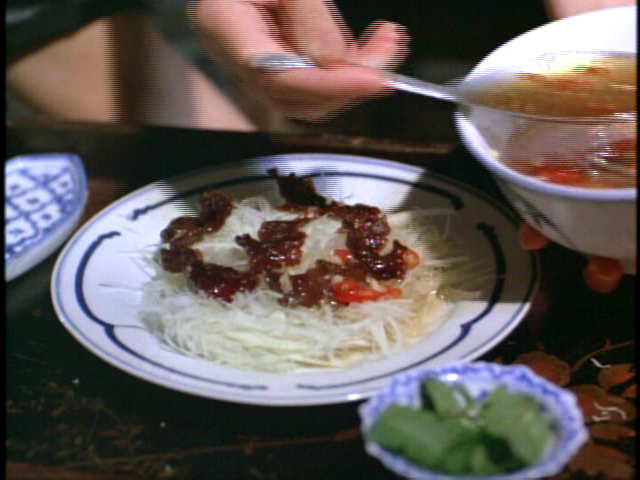
Here is a better illustration (than in an earlier similar blog) of one way Vietnamese papaya (Carica Papaya) salad is prepared. The garnish is beef jerky with sesame seeds. The sauce is flavored fish sauce spiced with fresh red pepper. At the end of the clip is a glimpse of another famous ingredient for a Vietnamese soup: the young flower buds of the "Thien-Ly" vine (Telosma Cordata or Odoratissima.) The "Thien-Ly" vine and its flowers are featured prominently in Vietnamese songs and poems romancing young love mainly because of its beautiful heart shaped leaves.
Saturday, March 31, 2007
Bunraku
The works of Chikamatsu Monzaemon (1653-1724) that skillfully describe the nature of humankind are performed as bunraku (a theater form originated in the sixteenth century uniting narration, music and puppets) and kabuki (a type of traditional Japanese theater in which men play female characters,) both of which are still familiar in today's Japan.
Bunraku, the traditional Japanese puppet theater (ningyo joruri) has a 400 year history. Bunraku was originally just the name of a theater troop that performed puppetry, but over time, the word evolved to indicate ningyo joruri itself, and it is now the official name of this form of puppetry. It is a style peculiar to Japan, in which the recitations of a male narrator, shamisen music performance and puppetry are united.
Bunraku features the superior literariness of gidayu, a style of reciting dramatic narratives, the highly qualified musicality, artistry, and dynamic sound of the thick-necked shamisen and the technique required for 3 puppeteers to handle 1 puppet (in Chikamatsu's time, puppets were smaller than they currently are, so each puppet was handled by one puppeteer). Its high quality and sensitive expressiveness and interpretation describe feelings of affection in a realistic manner.
Additionally, the precision of the heads, wigs and clothing of the puppets, together with the set decorations, lighting and sound effects blend to create a peculiar beauty in the theater space. Those who have seen this form of puppetry say it's unparalleled anywhere in the world, and it often overwhelms the audience.
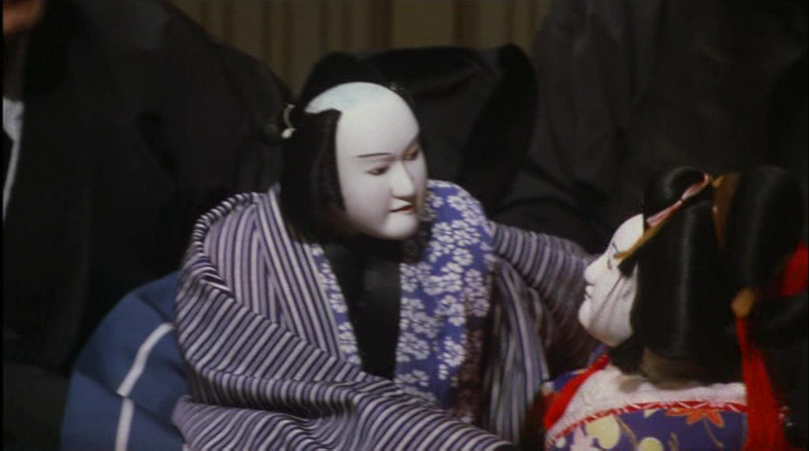
This is a bunraku puppet theater scene from "Meido no Hikyaku " (Messenger from Hell) that opens a movie by legendary director and actor Takeshi Kitano. The puppet show does have very poetic narration. Since overlaying the subtitle takes too much time that I do not currently have, below you can read the words that accompany the puppets' actions...
The scene depicts a messenger distressed because his beloved is being sold to another man, while the courtesan laments the fact that the other man wanted to buy her with money. Bunraku uses several operators in luxurious kimonos: A story teller, the "tayu." The singer "joruri" sits behind the scene and interprets all the characters in the play. The music is by a sole musician playing a "shamisen" which is a kind of three string guitar. The musician not only plays the music score but he also creates sound effects such as rain, wind etc... Each puppet which can be as large as 4' or 5' is handled by three male operators. The Master Operator "omozukai" appears full face and he takes care of the facial expressions of the puppet (movements of the eyes, eye brows and mouth which can all move;) and the right arm. His first assistant handles the left arm and his second assistant is in charge of the legs, or the clothing of the female characters who do not have legs. The assistants wear black and black hoods.
Here are the words of "Messenger from Hell:"
I beg you
Calm your heart
Do not be a slave
To such miserable feelings
Who has put you in this state?
No one else...
No other than I...
I, Umekawa...
I am to blame for all
Should I be grateful?
Or should I lament?
I don't know
Cries...
Read my heart
Bowed in touching distress
She cried anguish tears
Onto the pieces of gold
The coins soon resembled
Beautiful and bright kerria flowers
All covered with dew
Bathed in her tears
The coins sparkled brilliantly
Second act...
....
Honor, glory and fortune
Are only fleeting grains of sand
Their traces become dust
Scattered on the roads to Yamato
To be forever trampled on.
Bunraku, the traditional Japanese puppet theater (ningyo joruri) has a 400 year history. Bunraku was originally just the name of a theater troop that performed puppetry, but over time, the word evolved to indicate ningyo joruri itself, and it is now the official name of this form of puppetry. It is a style peculiar to Japan, in which the recitations of a male narrator, shamisen music performance and puppetry are united.
Bunraku features the superior literariness of gidayu, a style of reciting dramatic narratives, the highly qualified musicality, artistry, and dynamic sound of the thick-necked shamisen and the technique required for 3 puppeteers to handle 1 puppet (in Chikamatsu's time, puppets were smaller than they currently are, so each puppet was handled by one puppeteer). Its high quality and sensitive expressiveness and interpretation describe feelings of affection in a realistic manner.
Additionally, the precision of the heads, wigs and clothing of the puppets, together with the set decorations, lighting and sound effects blend to create a peculiar beauty in the theater space. Those who have seen this form of puppetry say it's unparalleled anywhere in the world, and it often overwhelms the audience.
This is a bunraku puppet theater scene from "Meido no Hikyaku " (Messenger from Hell) that opens a movie by legendary director and actor Takeshi Kitano. The puppet show does have very poetic narration. Since overlaying the subtitle takes too much time that I do not currently have, below you can read the words that accompany the puppets' actions...
The scene depicts a messenger distressed because his beloved is being sold to another man, while the courtesan laments the fact that the other man wanted to buy her with money. Bunraku uses several operators in luxurious kimonos: A story teller, the "tayu." The singer "joruri" sits behind the scene and interprets all the characters in the play. The music is by a sole musician playing a "shamisen" which is a kind of three string guitar. The musician not only plays the music score but he also creates sound effects such as rain, wind etc... Each puppet which can be as large as 4' or 5' is handled by three male operators. The Master Operator "omozukai" appears full face and he takes care of the facial expressions of the puppet (movements of the eyes, eye brows and mouth which can all move;) and the right arm. His first assistant handles the left arm and his second assistant is in charge of the legs, or the clothing of the female characters who do not have legs. The assistants wear black and black hoods.
Here are the words of "Messenger from Hell:"
I beg you
Calm your heart
Do not be a slave
To such miserable feelings
Who has put you in this state?
No one else...
No other than I...
I, Umekawa...
I am to blame for all
Should I be grateful?
Or should I lament?
I don't know
Cries...
Read my heart
Bowed in touching distress
She cried anguish tears
Onto the pieces of gold
The coins soon resembled
Beautiful and bright kerria flowers
All covered with dew
Bathed in her tears
The coins sparkled brilliantly
Second act...
....
Honor, glory and fortune
Are only fleeting grains of sand
Their traces become dust
Scattered on the roads to Yamato
To be forever trampled on.
Friday, March 16, 2007
Papaya & Gac
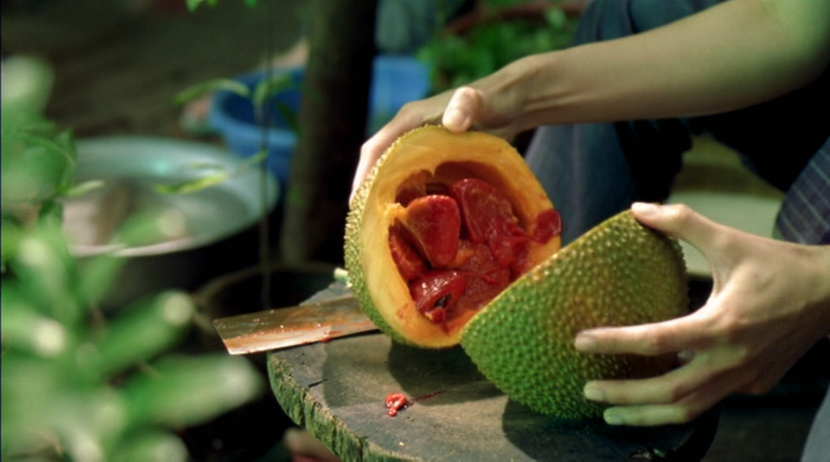
In this clip, if you do not blink and pay attention, you may be able to witness a modern day rendering of the traditional way Vietnamese women prepare meals in their homes. On the far right, you may be able to make out the preparation of a famous and delicious green papaya salad. The woman first peels the green papaya and then uses a hand shredder to shred it into long threads for the salad. In the middle is a rare close up viewing of a fruit named "Gac (Momordica Cochinchinensis Spreng)" whose highly pigmented seeds are used to provide the briliantly decorative color red in various dishes. There are no tables and they prepare their food, outdoors, at ground level, sitting on tiny stools.
Thursday, March 15, 2007
Easy To Love
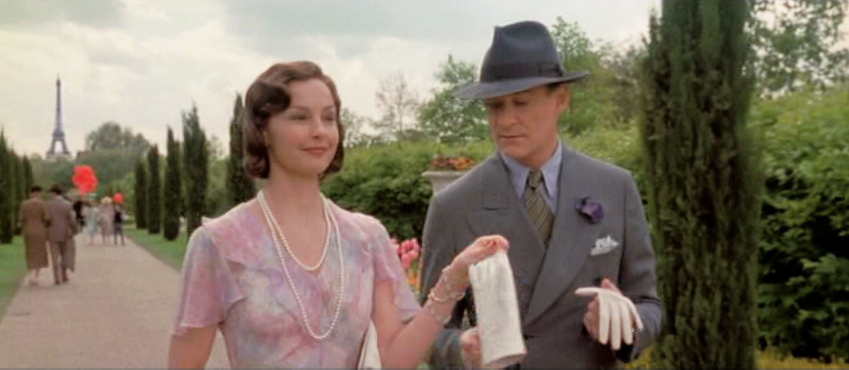
I felt so guilty to have given you such a sad blog in "Every Time We Say Goodbye," so this is to make it up to you... The tower on the left in the background is the Eiffel.
Wednesday, March 14, 2007
Friday, February 23, 2007
That's Entertainment
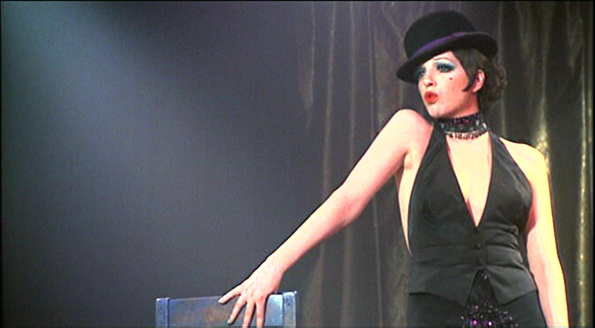
You ought to lighten up once in a while, so here is something that may cheer you up, may be, may be not... I like it!
Der treue Hussar
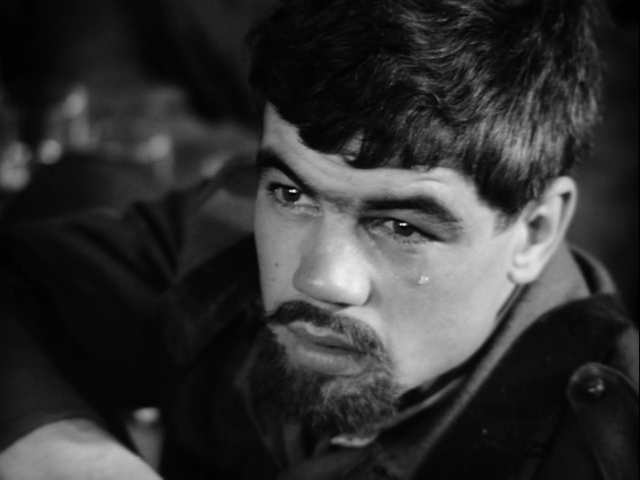
If you wonder why sometimes grown men cry, and you will see plenty of it here, it is from the words of the song sung by Christiane Harlan at the end of the video clip. She was the movie director Stanley Kubrick's wife. Yes, this is another clip from Kubrick... and here is the translation of...
"The Faithful Soldier" - or Der treue Hussar (in German)
A faithful soldier, without fear,
He loved his girl for one whole year,
For one whole year and longer yet,
His love for her, he'd ne'er forget.
This youth to foreign land did roam,
While his true love, fell ill at home.
Sick unto death, she no one heard.
Three days and nights she spoke no word.
And when the youth received the news,
That his dear love, her life may lose,
He left his place and all he had,
To see his love, went this young lad...
He took her in his arms to hold,
She was not warm, forever cold.
Oh quick, oh quick, bring light to me,
Else my love dies, no one will see...
Pallbearers we need two times three,
Six farmhands they are so heavy.
It must be six of soldiers brave,
To carry my love to her grave.
A long black coat, I must now wear.
A sorrow great, is what I bear.
A sorrow great and so much more,
My grief it will end nevermore.
This clip will pop up a separate window so you can read the words in parallel. Ain't that nice?
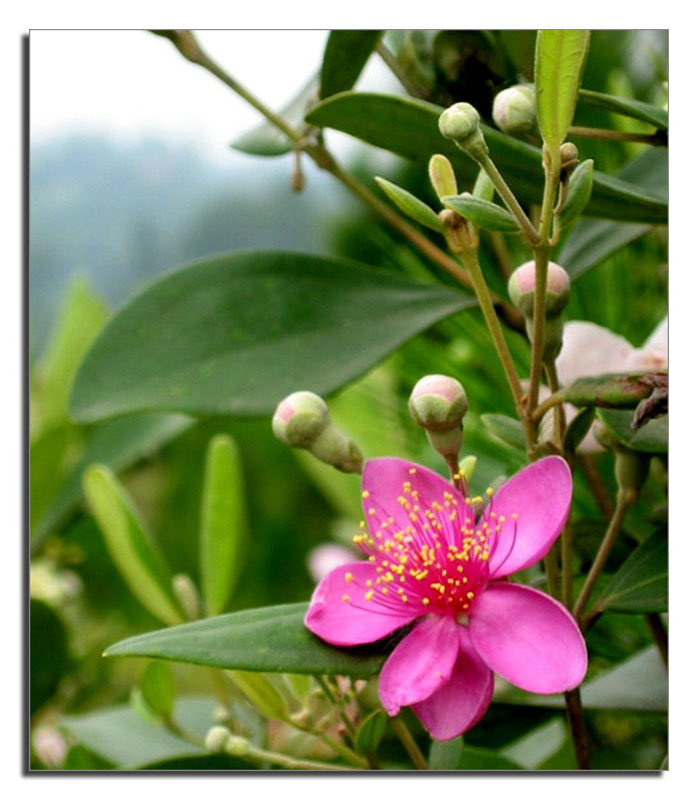
This sentiment is universal, especially during war time. Here is another partial translation of a famous love poem from a war torn country: The color purple of the Downy Rose Myrtle...
Getting married during war time
Many may not return
If I cannot return
I feel
for the fragile wife
awaiting me at home
But the soldier
does not perish at the hellish front
Yet
the little girl died at home
I return
to her absence
My mother sat at the grave in the dark shadow
near the wedding flower vase
now containing the burning incense
enveloped in faded coldness
Her dark hair
short due to her young age
My love, your last moments
we could not share our whispers
we could not share our last glances
She used to love the purple downy rose myrtle flowers
Her dress always of myrtle purple color
Once upon a time
The late night lamp
casting a tiny shadow
you mended your husband's old shirt
Once upon a time....
That's it! Good night!
"The Faithful Soldier" - or Der treue Hussar (in German)
A faithful soldier, without fear,
He loved his girl for one whole year,
For one whole year and longer yet,
His love for her, he'd ne'er forget.
This youth to foreign land did roam,
While his true love, fell ill at home.
Sick unto death, she no one heard.
Three days and nights she spoke no word.
And when the youth received the news,
That his dear love, her life may lose,
He left his place and all he had,
To see his love, went this young lad...
He took her in his arms to hold,
She was not warm, forever cold.
Oh quick, oh quick, bring light to me,
Else my love dies, no one will see...
Pallbearers we need two times three,
Six farmhands they are so heavy.
It must be six of soldiers brave,
To carry my love to her grave.
A long black coat, I must now wear.
A sorrow great, is what I bear.
A sorrow great and so much more,
My grief it will end nevermore.
This clip will pop up a separate window so you can read the words in parallel. Ain't that nice?
This sentiment is universal, especially during war time. Here is another partial translation of a famous love poem from a war torn country: The color purple of the Downy Rose Myrtle...
Getting married during war time
Many may not return
If I cannot return
I feel
for the fragile wife
awaiting me at home
But the soldier
does not perish at the hellish front
Yet
the little girl died at home
I return
to her absence
My mother sat at the grave in the dark shadow
near the wedding flower vase
now containing the burning incense
enveloped in faded coldness
Her dark hair
short due to her young age
My love, your last moments
we could not share our whispers
we could not share our last glances
She used to love the purple downy rose myrtle flowers
Her dress always of myrtle purple color
Once upon a time
The late night lamp
casting a tiny shadow
you mended your husband's old shirt
Once upon a time....
That's it! Good night!
Subscribe to:
Posts (Atom)